ATTENTION: IT SALES INDIVIDUAL CONTRIBUTORS...
The Ultimate STEP-BY-STEP Playbook for Tech Sales Individual Contributors Who Want to Close MORE and BIGGER Sales... FASTER!
(Without using any pushy, high-pressure sales tactics or simply discounting to win business!)
Free eBook: Expert Secrets
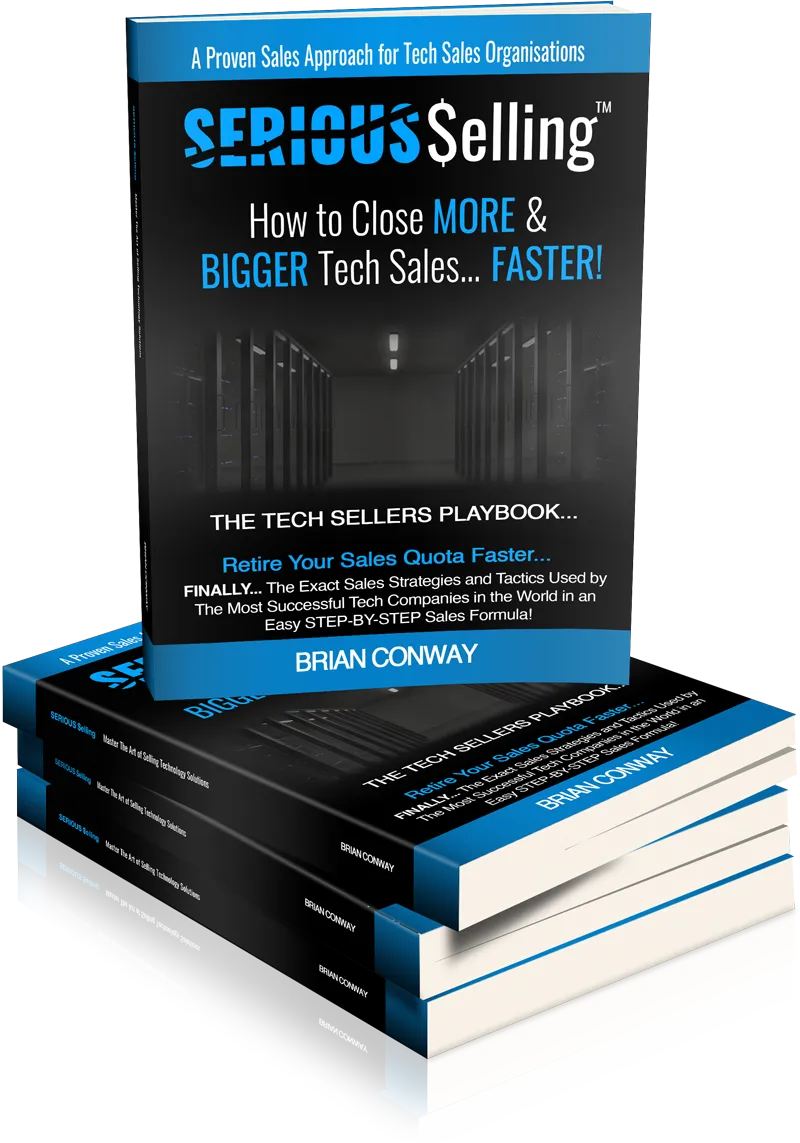
Let Me Double Your Sales Results In Just 6 Weeks WITHOUT Having to Take Time Off the Road
Get everything I've learned in 25 years of working with the most successful Tech sales teams around the world....
All condensed into a simple sales process & methodology that gets fast results and with the minimum of effort.
That addresses how the pandemic has changed buying behaviour and the affect of AI in the sales cycle. AND...
...It's accessible to everyone... even if you don't have the deep pockets and large training budgets of the large technology titans.
Just some of the sales organisations I've worked with over 25 years...

Once You Discover These Secrets, Your Whole Approach to Selling IT Solutions Will Change and With That Change Will Come HUGE Sales Success!
This Course Gives You...
A play-by-play set of instructions on how to become an Tech sales superstar, how to close more deals and how to make more money!
SALES MANAGERS... This framework gives your team the strategies and tactics to explode their sales performance and improve their sales pipeline, sales predictability and sales forecasting accuracy.
You Get...
A repeatable 7-step sales process for closing B2B sales of IT solutions with ease
A "SIMPLE" Sales Script for discovering a prospects motivation for change in a single conversation
A powerful way of presenting your offer that gets your prospect begging you to sell them your solution
An EASY 6-step process for effortlessly unblocking any sales objection
A process called "Pareto Profits" that will help you scale your sales and retire your quota faster
And much more...
From The Desk Of Brian Conway
United Kingdom
For over 25 years I've worked with some of the biggest tech companies in the world, companies like Cisco, Google, Lenovo, HPE, TikTok, Adobe, Nokia, Microsoft, Aruba, Workday and so the list goes on...
I've also worked with hundreds of independently owned Resellers, Channel Partners, Service Providers & SaaS companies, helping them all with JUST ONE THING... SALES!
I've now taken all the best bits of everything I've taught over the years and all the SECRETS I've gleaned from helping these companies transform their sales and I've created a step-by-step sales method, ESPECIALLY for Sellers of IT solutions called... SERIOUS $elling™
Testimonials
"This training exceeded my expectations!
Brian is a knowledgeable Instructor who provided valuable insights, practical techniques and real-world examples that have already had an impact on my sales performance.
I highly recommend this course to anyone looking to enhance their sales skills and in turn improve their results!"
Chris James
Account Manager
Camwood Limited
"The SERIOUS Selling framework made us take the sale back to basics, ask a lot more questions about the motivation for change and the business impact of our solution, and then use the methodology of speaking to the right people to further our case.
We quickly found out we had been selling to the wrong person and when we involved Finance and other lines of business, our job became a lot easier.
It took us a while but we turned this around from thinking we would lose the deal to securing a £280,000 sale and we now have the opportunity to sell to another part of the group”
Doug M,
Account Manager
Global Telco

Course Content...
Introduction
Get ready to rewrite the script of your sales career as you step into the realm of the most powerful IT sales course you'll ever attend.
This is more than just a course; it's a game-changing expedition that will revolutionise your sales approach.
From mastering the art of persuasion to decoding the psychology behind buying decisions, every module is designed to equip you with an arsenal of sales strategies and tactics., learned from working with the most successful Technology sales organisations in the world.
Including a dynamic blend of cutting-edge strategies, battle-tested techniques and real-world insights, all meticulously curated to take your sales game to unprecedented heights.
Sales Strategy
Sales success isn't left to chance – it's shaped by a well-orchestrated sales strategy.
Picture your strategy as the compass that guides you through the labyrinth of opportunities, pitfalls, and decisions. It's not just a plan; it's your "Roadmap to Revenue".
At the heart of this strategy lies a clearly defined sales process. Imagine a path laid out before you, with each stage designed to seamlessly guide prospects from initial interest to a closed deal and retired sales quota.
This process isn't a mere sequence; it's a well-thought-out journey that streamlines your efforts, reduces ambiguity, and sets the foundation for predictable success.
Engagement Plan
In the realm of sales, success isn't a coincidence – it's a result of meticulous preparation. As you gear up for a sales meeting, consider it a battlefield where the most prepared emerge victorious.
Your "Situational Fluency" becomes your armor, a powerful hypothesis your sword, and well-defined meeting objectives your battle plan.
Imagine stepping into that meeting room armed with a comprehensive understanding of your client's business landscape, pain points, and aspirations.
This isn't just about knowledge; it's the key to building trust and credibility. Your client feels valued when they realise you've taken the time to truly understand their world.
Reveal the Need
Don your detective hat and start your journey as the agent of transformation.
Master the art of identifying the deep-seated needs and desires of your IT prospects. Get ready to unleash your inner Sherlock Holmes as you pinpoint their pain points and desired outcomes.
But that's not all – you're not just solving a puzzle; you're crafting the blueprint for creating undeniable value. The "Value Gap" becomes your focus – that space between where they are now and where they want to be.
It's here that you position your products and services, as the bridge that spans the gap and leads them to a future of fulfillment.
Illuminate Impact
This pivotal step involves delving deep into the needs and pain points of your potential clients, uncovering not just what they require, but how those needs reverberate through their operations. It's about understanding the "Domino Effect", the cascading benefits, and the transformative power that your solution can bring.
By meticulously mapping out the impact, you craft a compelling narrative that resonates with your clients, positioning your offering not just as a solution, but as a catalyst for their success.
In this journey of insights, data-driven understanding, and strategic alignment, you seize the chance to become more than a seller – you become a strategic partner, the 'Trusted Advisor', ready to elevate their business to new heights and making your solution the only logical choice.
Offer Your Solution
Presenting your solution goes beyond a simple pitch – it's a strategy aimed at showcasing measurable business value, aligning your offering perfectly with the client's goals.
With every slide and data point, you illuminate how your solution directly addresses their pain points and objectives.
It's about demonstrating how your product or service seamlessly bridges the gap between their current challenges and their desired outcomes.
And as your presentation reaches its conclusion, your audience isn't just informed – they're compelled. Your content isn't just explanatory; it's transformative. Every presentation is an opportunity to demonstrate how your offering can deliver substantial business value, leaving your prospects eager to move forward.
Unblock Objections
Be prepared to embrace objections as your allies and objection handling as your superpower.
Your capacity to handle objections both proactively and in real-time is your secret weapon for sealing the deal.
With a proven 6-step process, you'll not only be able to use objections as a way of closing the sale, but a way of building a relationship founded on trust and transparency.
By mastering this art, you're stepping into a realm of sales success where objections are no longer obstacles, but opportunities to shine brighter, close bigger and stand out from the crowd.
Scale the Sale
Using a principle called "Pareto Profits" you'll discover a goldmine of untapped opportunity that will help you hit quota easier than ever before.
Using 3 powerful sales strategies you will embark on a journey of exponential sales growth.
Scaling your sales success through automation, the power of AI and a secret weapon called "NicheCraft", you will be outsell your competition and every turn.
It's a strategic dance of value, where every touchpoint becomes a chance to provide more and elevate your client's experience. Scaling doesn't just mean more revenue; it means deepening relationships, fostering loyalty, and positioning yourself as a trusted partner for their evolving needs.
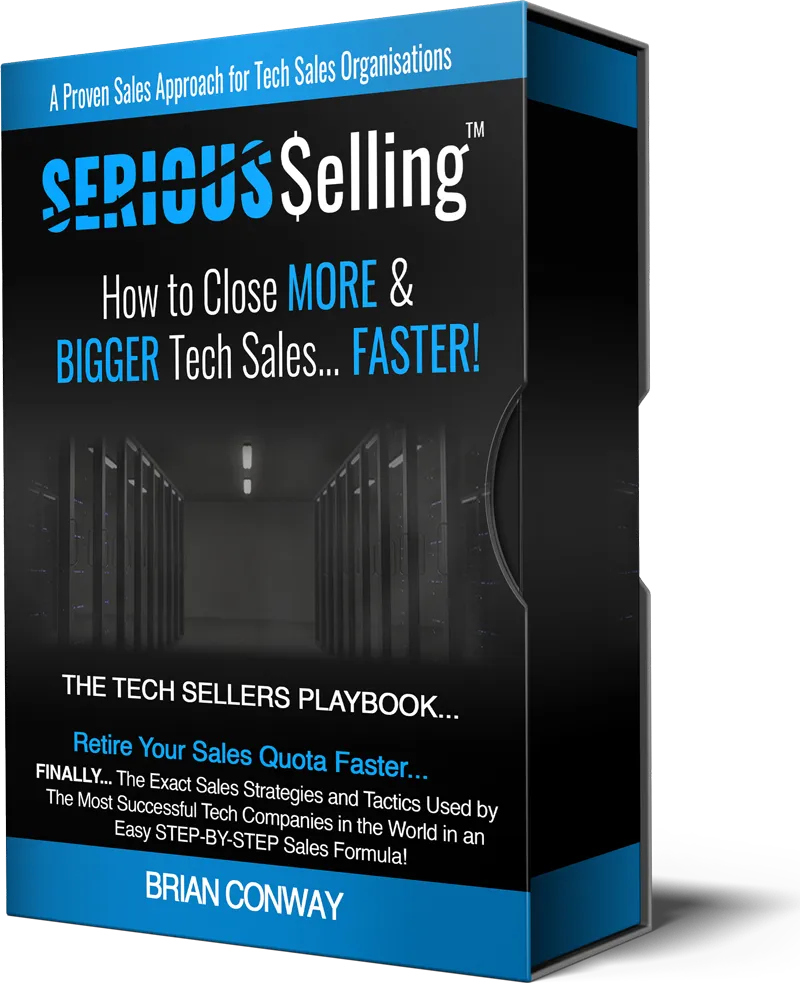
Here's What You Get...
1. This is a 6 Week Class (but you will have unlimited access to all recordings).
2. The class shows you how to put together a complete IT sales system that takes all the "Selling" out of selling. You get a complete step-by-step blueprint on how to prepare for a meeting, engage with a prospect, carry out value discover, identify measurable value, present your solution with impact, and close, with prospects asking to do business with you. (VALUE £1,497)
PLUS, you get...
BONUS: 6 weeks of personal live coaching from me (VALUE £1,500)
How It Works...
1. Every Monday I release a new module of training.
2. You simple watch the videos and implement the game plan...it's as simple as that.
3. On Thursday's you get to jump on a LIVE coaching call, with me, so we can iron out any questions you might have, or discuss specific sales opportunities and how you might close them.
Requirements...
1. Internet access, a computer (obviously - LOL) and a B2B technology offering.
2. About 90 minutes a week to meet with me and then go implement what you learned.
3. FOCUS: This sales process and methodology are very simple and easy to learn. BUT...you might be tempted by "shiny objects" or other distractions. Don't let that happen! If you follow the formula you learn in this class, you WILL start closing more sales and generating more revenue and profits.
IMPORTANT DISCLAIMER...
This is about sales and selling and there are no guarantees.
I do not know your work ethic, how focused you are, how well you follow instruction and more importantly how fast you will implement the systems and strategies I will teach you. Therefore...
I'm not promising you any results of any kind other than a great learning experience as you discover a new and simple approach to selling IT products and services. But...
I will be showing you what's working for me, my clients, and the very same sales tactics and strategies that are working now... and I'll help you implement these systems over a matter of weeks.
But I'm certainly not implying you'll have the same results as previous clients...there is no way anyone could predict that.
I've been teaching sales since 1997 and one thing I can promise you is that everything always takes more work than we think it will at first, but with repetition and practice, it will become easy!
Having said that, the sales skills I'm going to teach you are something you can never UN-LEARN.
The skills you learn here CANNOT be taken away from you. You will have this knowledge forever.
Investment...
>>>SPECIAL OFFER... 60% OFF <<<
£599
Normally £1,497.00 (plus £3k for coaching for free) TOTAL VALUE: £4,500
You will learn more from this class (and get better results) than you would from taking something that's ten times more expensive.

Copyright © Achieve Success Limited 2023. All Rights Reserved